




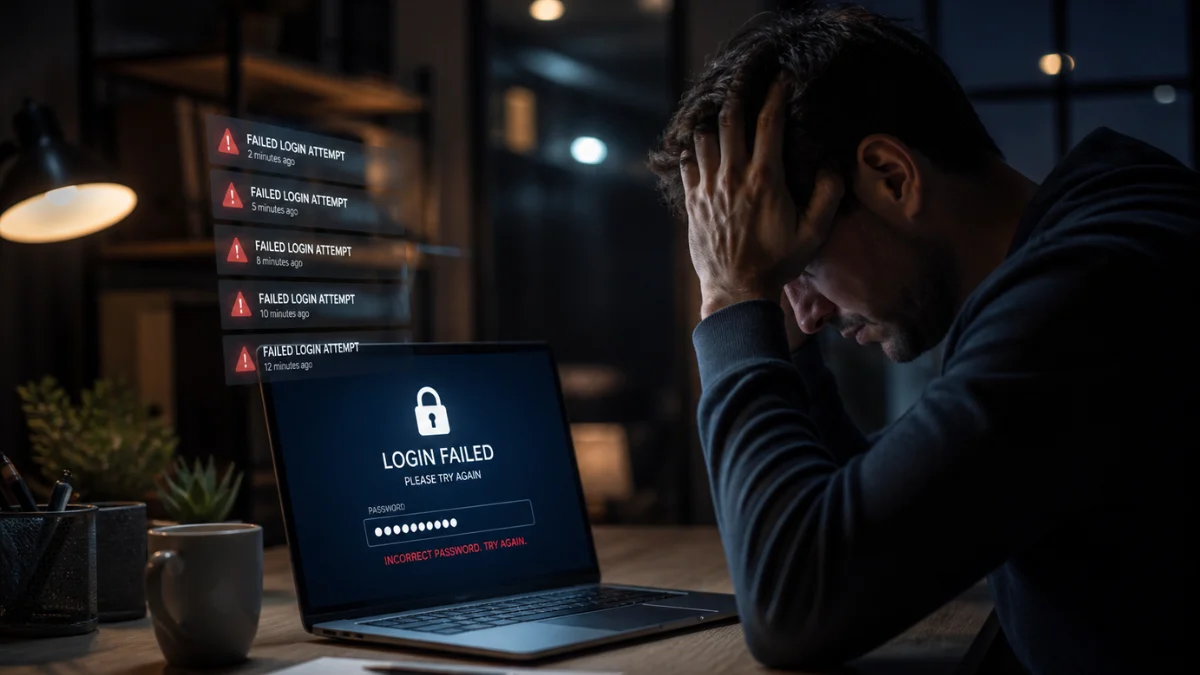
It usually starts with something small. A login attempt you didn’t make. A password reset email you didn’t request. Or worse, access suddenly denied to an account you’ve used for years.
For many people, the moment of realization comes late—after damage is already done.
Passwords, despite all the talk about biometrics and passwordless systems, still sit quietly at the center of digital life. Banking, social media, email, work dashboards—almost everything depends on them. And yet, most people treat passwords as an afterthought, something to get through quickly rather than something to design carefully.
That gap between importance and behavior is exactly where security breaks down.
Why Passwords Still Matter in Cybersecurity & Safety
The concept of a password isn’t a recent invention. It traces back to old methods of confirmation—things like spoken codes that guards used to identify friendly faces. What has really changed is the sheer volume.
Nowadays, instead of guarding a single gate, you’re looking at dozens, even hundreds, of accounts. Each one represents a possible way in. And attackers aren’t just trying their luck with guesses anymore. They’re leveraging automation, data from previous leaks, and predictable human habits.
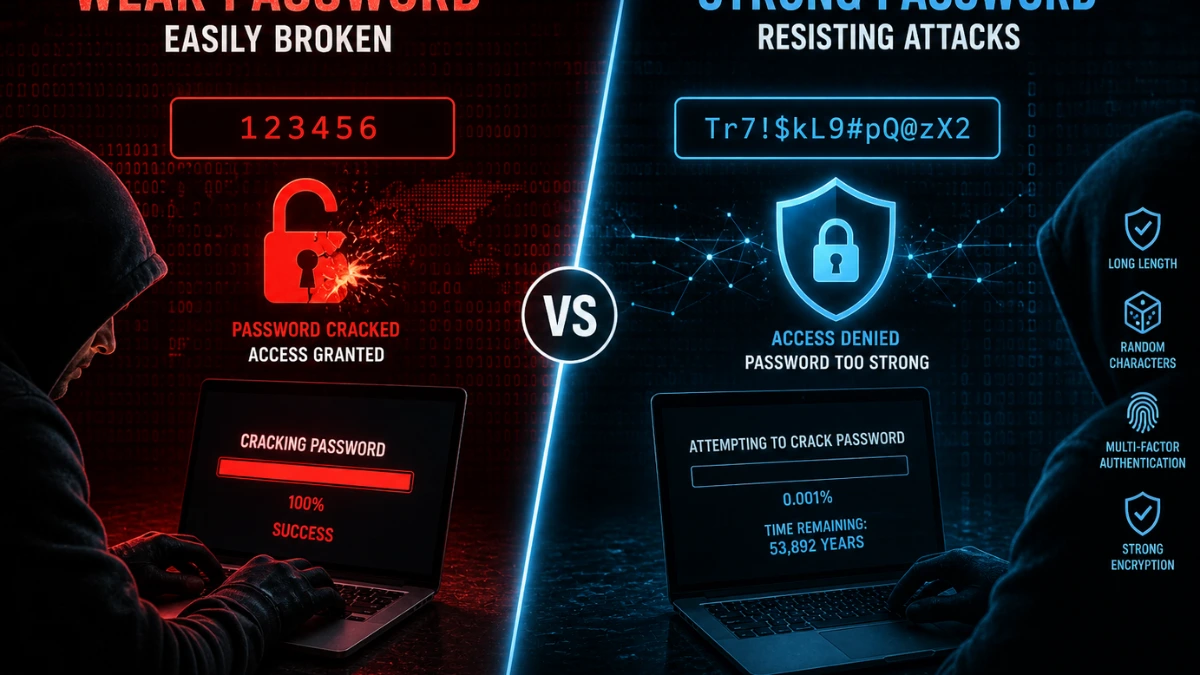
Here’s the difficult reality: most security breaches don’t occur because the underlying systems are flawed. They happen because the passwords themselves are weak.
Looking at recent reports of data breaches, a clear trend emerges: common passwords like “123456,” “password,” or combinations of names and birthdates are still incredibly prevalent. This isn’t really about people being lazy. It’s more about cognitive overload. Individuals are juggling so many accounts that they naturally fall back on what’s easiest to recall.
However, that very ease is precisely what attackers take advantage of.
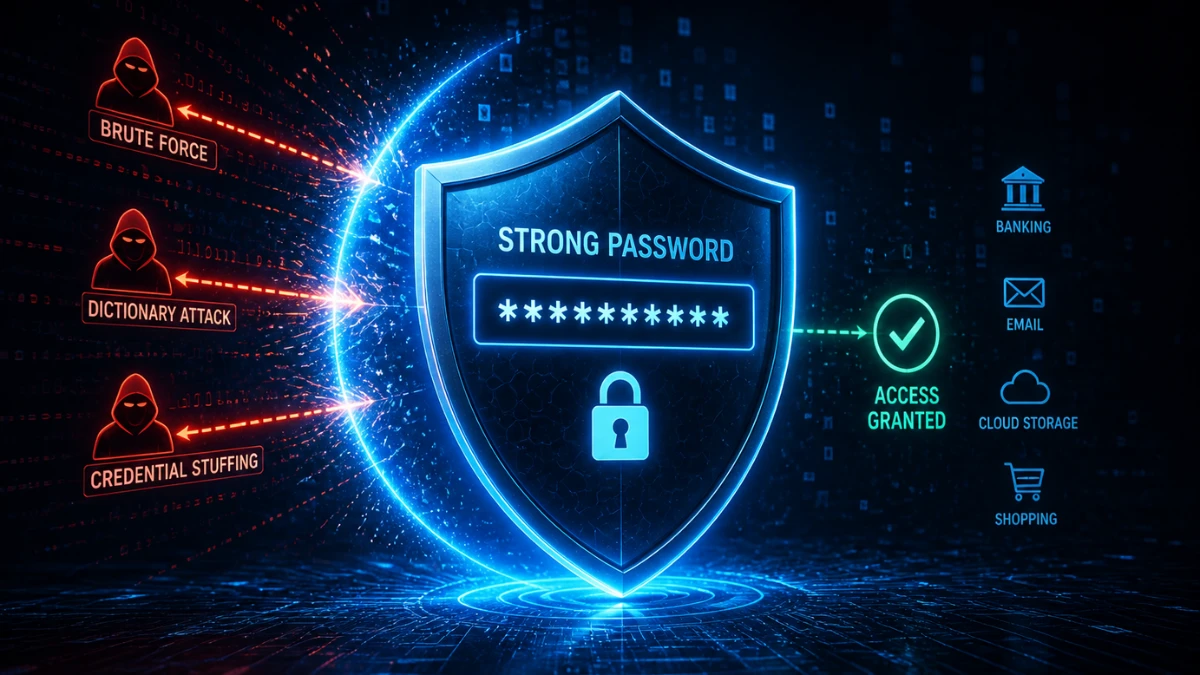
The Real Anatomy of a Strong Password
A strong password isn’t just about length or complexity—it’s about unpredictability.
Think of it less like a lock and more like a puzzle. The harder it is to predict the pattern, the stronger it becomes.
Length Over Complexity
For years, systems forced users into complicated combinations—uppercase, lowercase, numbers, symbols. While that helps, length has proven to be far more powerful.
A 16-character passphrase like:
“coffeeRiverWindowSkyTrain”
is significantly stronger than:
“P@ssw0rd!”
Why? Because modern cracking tools use brute-force attacks. Longer combinations exponentially increase the time required to break them.
Unpredictability Beats Personalization
Most people unknowingly design passwords around their lives—names, birthdates, favorite teams. These are easy targets because attackers often start with publicly available information.
The safest passwords feel random, even to you. If it looks like something you’d never naturally type, you’re probably on the right track.
The Psychology Behind Weak Passwords
People reuse passwords across accounts for a good reason. It’s not because they don’t know better – it’s a matter of necessity.
Keeping track of numerous strong passwords without a system in place feels overwhelming. So, people take the easier route: reusing them, making minor changes, or using memory tricks.
Cybercriminals are more aware of this human tendency than most users.
When a website experiences a data breach, attackers don’t limit their efforts to that single account. They’ll attempt to use the same login details on banking applications, email accounts, and social media platforms. This method, known as credential stuffing, is effective because people tend to be consistent with their choices.
From a cybersecurity and safety standpoint, this problem goes beyond just technical challenges; it’s deeply rooted in human behavior.
As long as password strategies don’t take into account how people naturally think and act, security weaknesses will continue to exist.
Practical Framework: Building Passwords That Actually Work
Strong passwords don’t come from memorization. They come from systems.
1. Use Passphrases Instead of Words
Create a sentence or phrase that only you can interpret.
Example:
“BlueCarDrivesAtMidnightUnderStars”
It’s long, memorable, and difficult to guess.
2. Avoid Reuse at All Costs
Every account should have a unique password. If one gets compromised, others remain safe.
This is non-negotiable in modern cybersecurity & safety practices.
3. Use a Password Manager
This is where most people hesitate—but it’s the most practical solution.
Password managers generate and store complex passwords so you don’t have to remember them. You only need to secure one master password.
4. Add Multi-Factor Authentication (MFA)
Even the strongest password benefits from a second layer.
MFA ensures that even if someone gets your password, they still need access to your phone, email, or authentication app.
5. Avoid Patterns
Passwords like:
“Name@123,” “City@2024,” or “Password1!”
are predictable because millions of users follow similar formats.
Attackers don’t guess randomly—they guess patterns.
Why This Topic Is Trending Now
The increase in cyberattacks isn’t just a number; you see it in the news every day.
Whether it’s major data breaches or specific phishing attempts, digital security is now a top concern for everyone. With more people working remotely, using digital payments, and relying on cloud services, the potential for attacks has grown significantly.
Meanwhile, the tools available to attackers have become much more advanced. For example, password-cracking software can now try billions of combinations every second.
This gap between how people behave and what machines can do is precisely why password security is such a critical problem.
Beyond Individuals: The Business Angle
Weak passwords aren’t just a problem for individuals; they put entire organizations at risk.
Just one employee’s compromised login can result in:
* Data breaches
* Financial losses
* Damage to the company’s reputation
While many companies have implemented strict password policies, enforcement alone isn’t a complete solution. Employees frequently find ways around these rules, such as writing passwords down, saving them in unsecured documents, or using the same password on multiple sites.
The true answer is to make secure practices simpler than insecure ones.
Companies that invest in tools like password managers, single sign-on (SSO), and employee training are doing more than just boosting security; they’re also streamlining workflows.
The Future of Passwords: Are They Disappearing?
There’s growing discussion around a “passwordless future.” Technologies like biometrics, hardware keys, and passkeys are gaining traction.
But passwords aren’t going away anytime soon.
Instead, they’re evolving. They’re becoming part of a broader authentication ecosystem rather than the sole line of defense.
In the near future, expect a hybrid model:
- Passwords for baseline access
- Biometrics for convenience
- MFA for critical verification
Understanding how to create strong passwords remains essential, even as new systems emerge.
Cybersecurity & Safety in Everyday Life
Most people don’t think about cybersecurity until something goes wrong. But the reality is simpler:
Strong passwords are not a technical skill—they’re a daily habit.
Just like locking your door or wearing a seatbelt, they’re a small action with disproportionate impact.
And unlike physical security, digital vulnerabilities don’t require proximity. Someone across the world can attempt access within seconds.
That’s the scale we’re dealing with.
[ruby_related heading=”More Read” total=5 layout=1 offset=5]
Conclusion
The idea that a password can be “unhackable” is, strictly speaking, unrealistic. Given enough time and resources, anything can be broken.
But that’s not the goal.
The goal is resistance—making your accounts so difficult to breach that attackers move on to easier targets.
In cybersecurity & safety, strength is not about perfection. It’s about making compromise impractical.
Final Insight
Digital life is expanding faster than digital awareness. The systems we rely on are becoming more complex, but the habits we use to protect them often remain outdated.
Strong passwords are one of the few areas where individuals still have direct control. No policy, no platform, no institution can replace that responsibility.
The question is no longer whether security matters.
It’s whether everyday behavior is catching up to that reality.-The Vue Times
Frequently Asked Questions
What is a strong password in cybersecurity?
→ A strong password is long, unique, and unpredictable. It avoids personal information and common patterns, making it difficult for automated tools to guess or crack.
How many characters should a secure password have?
→ Ideally, at least 12–16 characters. Longer passwords significantly increase resistance against brute-force attacks.
Is it safe to use the same password for multiple accounts?
→ No. Reusing passwords increases risk because if one account is compromised, attackers can access others using the same credentials.
What is the best way to remember multiple passwords?
→ Use a password manager. It securely stores and generates strong passwords, so you only need to remember one master password.
Can strong passwords alone prevent hacking?
→ Not entirely. Strong passwords are essential, but combining them with multi-factor authentication provides much stronger protection.