







The first time a generative AI tool drafted a legal memo in minutes, a lawyer reportedly stared at the screen longer than expected—not out of admiration, but hesitation. The work was impressive. Almost too impressive. Somewhere between efficiency and unease, a question quietly surfaced: who is actually responsible for this output?
That moment captures the essence of the AI Regulation Debate—not a distant policy discussion, but a present-day tension unfolding across industries, governments, and everyday decisions.
Understanding the AI Regulation Debate
At its core, the AI Regulation Debate revolves around a deceptively simple question: how much control should governments have over artificial intelligence?
On one side, there is a strong push for regulation—rules to prevent misuse, protect privacy, and ensure accountability. On the other, innovators warn that excessive control could slow down progress, limit economic growth, and push development into less regulated regions.
The debate isn’t theoretical anymore. AI systems are already influencing hiring decisions, financial approvals, healthcare diagnostics, and even public opinion. Regulation is no longer about the future—it’s about managing the present.
Why the AI Regulation Debate Is Gaining Urgency
A few years ago, AI was mostly confined to labs and niche applications. Today, it’s embedded in everyday workflows. That shift has made the stakes significantly higher.
Consider deepfake technology. What began as an experimental novelty has evolved into a tool capable of manipulating political narratives and personal identities. Similarly, algorithmic bias—once an academic concern—has now translated into real-world discrimination in hiring and lending systems.
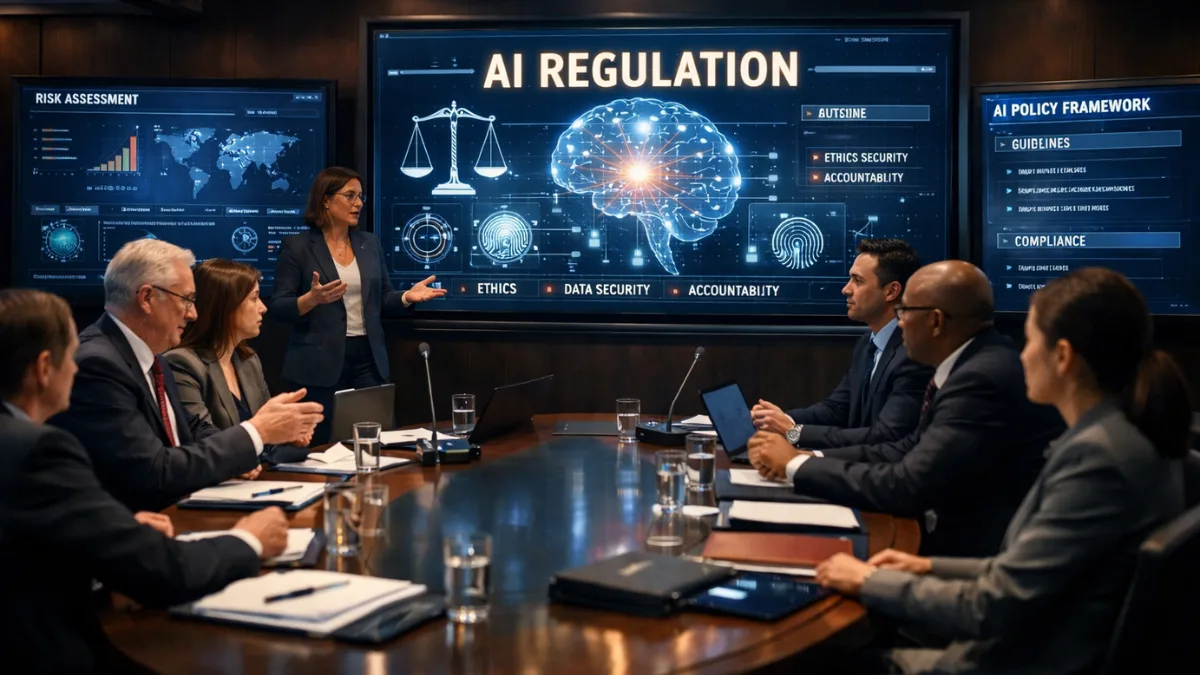
Governments have taken notice. The European Union has already introduced comprehensive frameworks like the AI Act, aiming to classify and regulate AI systems based on risk levels. Meanwhile, the United States Government is adopting a more sector-specific approach, issuing guidelines rather than sweeping laws.
The urgency stems from a simple reality: technology is moving faster than policy. And that gap creates both opportunity and risk.
Innovation vs Regulation: A Delicate Balance
There’s an uncomfortable truth at the heart of the AI Regulation Debate—both sides are right.
Regulation advocates argue that unchecked AI can lead to serious harm. Without oversight, companies might prioritize speed over safety, deploying systems that are opaque, biased, or even dangerous.
On the other hand, startups and tech companies warn that overregulation could create barriers to entry. Large corporations might absorb compliance costs, but smaller innovators could struggle to survive under heavy regulatory frameworks.
This creates a paradox. The very regulations designed to democratize and control AI could end up consolidating power among a few dominant players.
In conversations with developers, a recurring concern emerges: regulation should guide innovation, not suffocate it. The challenge lies in defining where that line exists—and it’s far from clear.
The Business Reality Behind AI Regulation
Beyond ethics and policy, there’s a strong business dimension driving the AI Regulation Debate.
Companies are no longer asking if AI should be regulated—they’re asking how to prepare for it. Compliance is becoming a competitive advantage. Organizations that can demonstrate transparency, explainability, and ethical use of AI are increasingly gaining trust among users and investors.
At the same time, uncertainty around regulations is creating hesitation. Businesses investing heavily in AI infrastructure are wary of sudden policy changes that could render their systems non-compliant overnight.
Interestingly, some companies are voluntarily adopting internal AI guidelines, even before regulations demand it. This shift signals a broader trend: trust is becoming as valuable as innovation.
The Psychological Layer: Why Society Feels Uneasy
Part of what fuels the AI Regulation Debate isn’t just practical risk—it’s psychological discomfort.
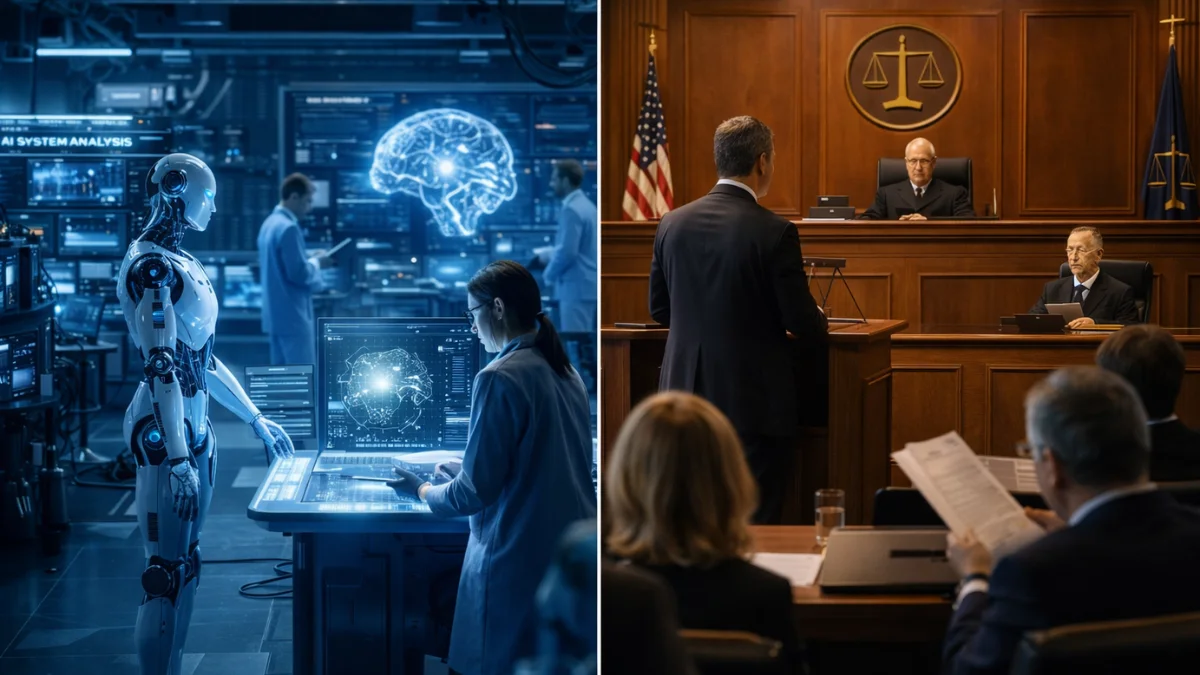
AI challenges deeply held assumptions about human uniqueness. When machines begin to replicate creativity, reasoning, or decision-making, it blurs boundaries that once felt stable.
This unease often translates into calls for stricter control. Not always because of immediate harm, but because of perceived loss of control.
There’s also a trust gap. People interact with AI systems daily, yet most don’t fully understand how they work. That opacity breeds skepticism—and in many cases, fear.
Regulation, in this sense, isn’t just about safety. It’s about reassurance.
Global Fragmentation: A Patchwork of AI Policies
One of the most complex aspects of the AI Regulation Debate is the lack of global alignment.
Different countries are approaching AI governance in fundamentally different ways:
- Europe is prioritizing risk-based regulation and user protection
- The United States is focusing on innovation with flexible guidelines
- China is implementing stricter state-controlled AI policies
This fragmented approach creates challenges for global companies. An AI system compliant in one region might violate laws in another.
More importantly, it raises a strategic question: will AI regulation become a geopolitical tool?
There’s growing speculation that countries could use regulatory frameworks not just for safety, but for competitive advantage—shaping global standards in their favor.
What the Future of AI Regulation Might Look Like
Predicting the outcome of the AI Regulation Debate is difficult, but certain patterns are already emerging.
First, regulation will likely become more adaptive. Static laws struggle to keep pace with evolving technology, so policymakers are exploring flexible frameworks that can evolve alongside AI systems.
Second, there will be increased emphasis on transparency. Explainable AI—systems that can justify their decisions—may soon become a regulatory requirement rather than a technical preference.
Third, collaboration between governments and tech companies will become essential. Purely top-down regulation risks being disconnected from technical realities, while self-regulation lacks enforceability.
Perhaps most importantly, the debate itself will continue. AI is not a fixed technology—it’s a moving target. Regulation will have to evolve continuously, not periodically.
[ruby_related heading=”More Read” total=5 layout=1 offset=5]
Conclusion
The AI Regulation Debate is less about choosing between innovation and control, and more about redefining how both can coexist.
It’s tempting to frame regulation as a brake on progress. But in reality, thoughtful regulation can act as a steering mechanism—guiding AI development toward outcomes that are not just powerful, but responsible.
The real risk isn’t that we regulate AI too much. It’s that we misunderstand what we’re trying to regulate in the first place.
Final Insight
At some point, the conversation will shift from whether AI should be regulated to who gets to shape those rules. And that shift will quietly determine not just how AI evolves—but who it ultimately serves.
If the AI Regulation Debate is handled well, it could define a future where innovation and accountability move together. If not, we may find ourselves reacting to technology we no longer fully control.