







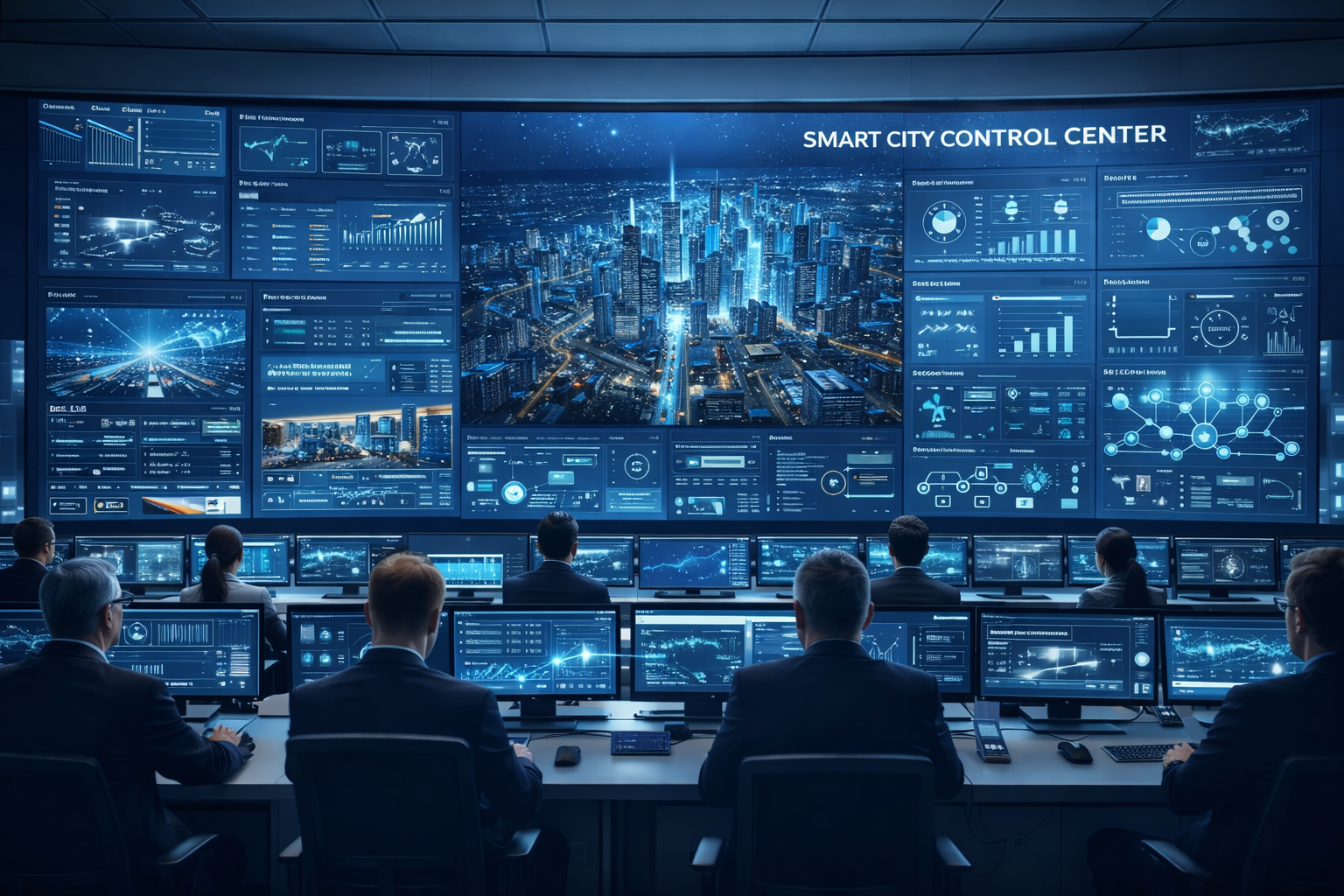
You cross a road, and the traffic light seems to “wait” for you. The streetlights dim when no one is around, then brighten as you approach. Garbage bins quietly signal when they need collection. Somewhere, unseen systems are watching patterns, not people—anticipating movement, adjusting flow, optimizing energy.
Nothing feels dramatic. That’s the point.
The Future of Smart Cities isn’t arriving with spectacle. It’s unfolding in small, almost invisible adjustments—tiny improvements layered over everyday life until the city itself begins to feel… aware.
What the Future of Smart Cities actually means
Strip away the buzzwords, and the idea is simple: cities that respond.
Not just react—but predict, optimize, and learn.
The Future of Smart Cities is built on a combination of technologies—AI, IoT sensors, data analytics, and connected infrastructure—that allow urban systems to function more intelligently. Traffic systems don’t just manage congestion; they anticipate it. Energy grids don’t just distribute power; they adapt to usage patterns in real time.
But technology is only the surface layer.
At its core, this shift is about decision-making at scale. Cities are moving from static systems to dynamic ones. From fixed schedules to adaptive responses. From human-managed inefficiency to machine-assisted optimization.
And that changes everything.
Why the Future of Smart Cities is accelerating now
For years, smart cities were treated as experimental zones—pilot projects, limited deployments, futuristic proposals.
That phase is over.
Three forces have pushed the Future of Smart Cities into urgency:
1. Urban pressure is reaching breaking point
Cities are expanding faster than infrastructure can keep up. Traffic congestion, pollution, waste management—these aren’t long-term problems anymore. They’re daily friction points.
2. Data has become usable
Cities have always generated data. What’s changed is the ability to process it in real time. AI systems can now convert raw data into actionable decisions within seconds.
3. Citizens expect efficiency
The same person who expects instant delivery from an app no longer tolerates slow public services. Expectations shaped by private tech are now being projected onto public systems.
The result? Cities are under pressure not just to function—but to perform.
The invisible layer: How cities are becoming systems
Walk through any modern urban space and you’ll notice something subtle: the physical city is no longer the whole city.
There’s an invisible digital layer running alongside it.
Sensors embedded in roads. Cameras analyzing traffic patterns. Systems tracking energy consumption across buildings. Networks connecting public transport, emergency services, and utilities into a single ecosystem.
This is where the Future of Smart Cities becomes real—not in futuristic architecture, but in interconnected systems.
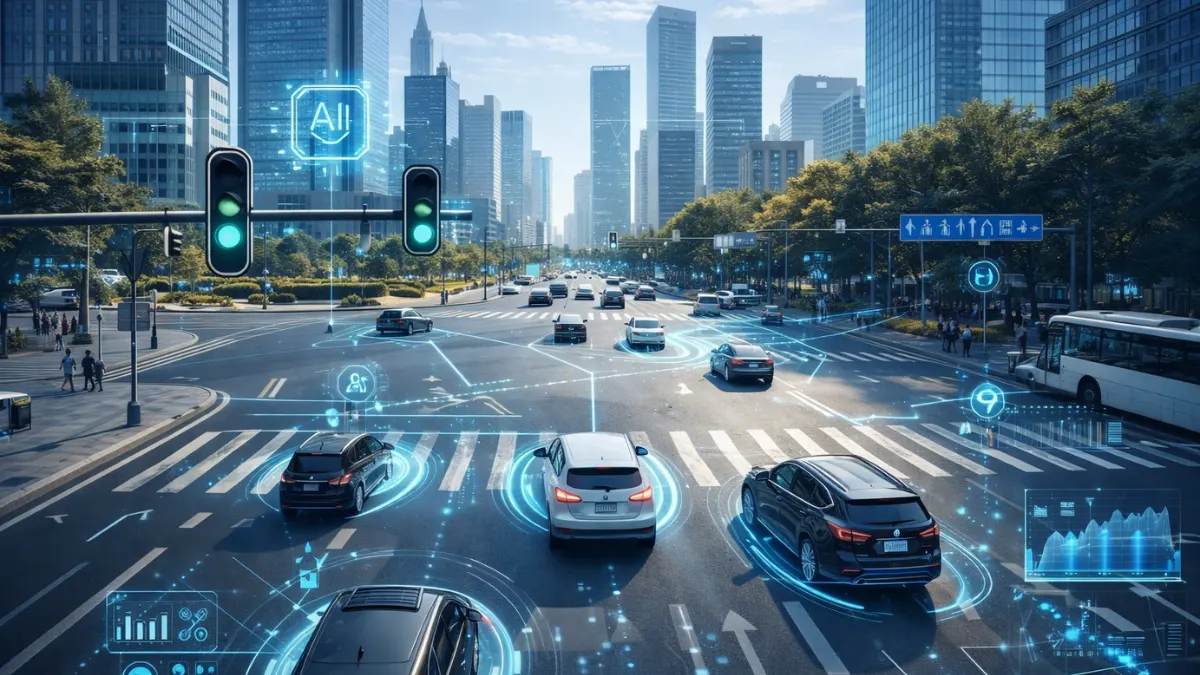
Take traffic as an example. Traditional systems rely on fixed timing. Smart systems adjust signals dynamically based on real-time flow. The difference isn’t just efficiency—it’s experience. Commutes become shorter. Frustration reduces. Productivity increases.
And all of it happens quietly.
Efficiency is only the beginning
It’s easy to assume that smart cities are mainly about convenience. Faster travel. Cleaner streets. Better lighting.
That’s only the first layer.
The deeper impact of the Future of Smart Cities lies in how they reshape behavior.
When traffic becomes predictable, people plan differently.
When public transport becomes reliable, dependency on private vehicles drops.
When energy usage becomes visible, consumption patterns shift.
In other words, smart cities don’t just optimize systems—they influence human decisions.
And that’s where things get interesting.
The business of smart cities
Behind the scenes, the Future of Smart Cities is also a massive economic shift.
Urban data is becoming one of the most valuable resources in the world.
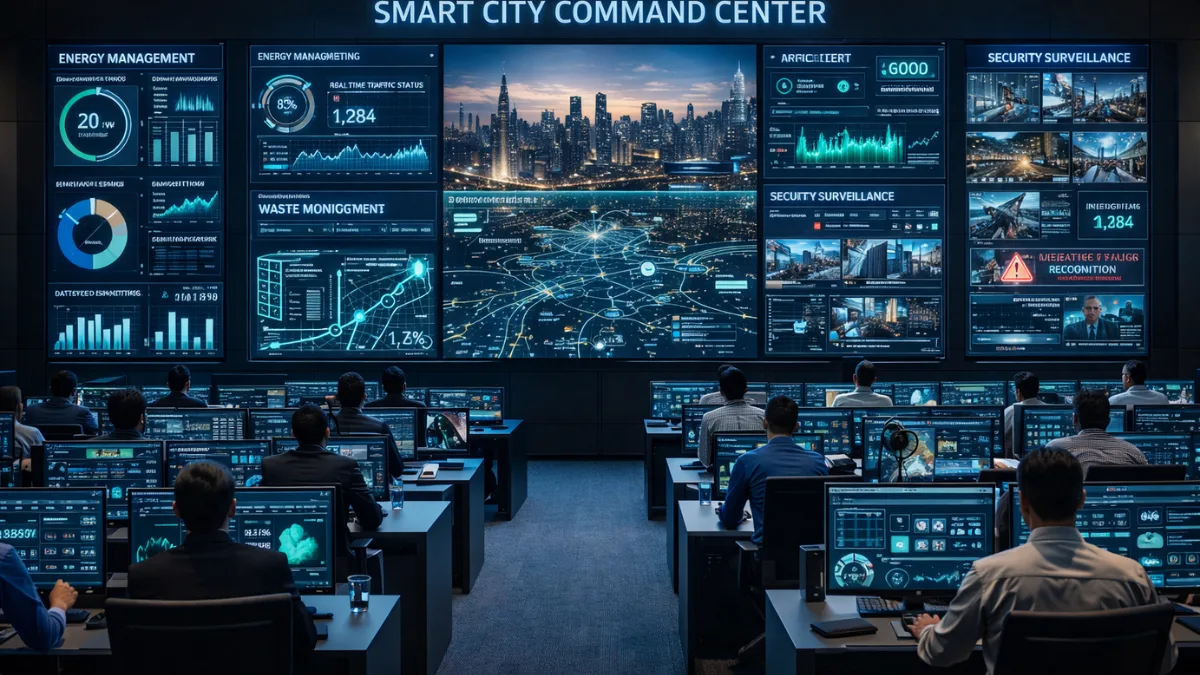
Companies are building platforms to manage traffic, energy, waste, security. Governments are partnering with private players to deploy infrastructure. Startups are emerging to solve hyper-specific urban problems—parking optimization, pollution tracking, predictive maintenance.
Cities are no longer just administrative zones.
They are becoming operating systems.
And like any operating system, whoever builds and controls the infrastructure holds influence.
This raises an important question:
Who owns the city’s intelligence—the government, private corporations, or the citizens themselves?
The answer isn’t clear yet.
The psychology of living in a smart city
There’s a subtle shift happening in how people experience cities.
In traditional urban environments, unpredictability was normal. Delays, inefficiencies, friction—they were part of daily life.
Smart cities reduce that unpredictability.
At first, it feels like convenience. Then it becomes expectation. Eventually, it becomes dependency.
The Future of Smart Cities may create environments where everything works so smoothly that any disruption feels intolerable.
That has psychological implications.
Will people become less adaptable?
Will reliance on automated systems reduce human awareness?
Or will it free mental space for more meaningful pursuits?
We don’t have clear answers yet—but the shift is already underway.
The challenges no one talks about enough
For all its promise, the Future of Smart Cities is not without friction.
Data privacy concerns
More sensors mean more data. The line between optimization and surveillance can blur quickly.
Infrastructure inequality
Not all cities—or even all parts of a city—will become “smart” at the same pace. This can deepen urban divides.
System dependency
The more cities rely on automated systems, the more vulnerable they become to failures—technical or cyber.
Cost and scalability
Building smart infrastructure requires massive investment. Maintaining it requires even more.
These are not side issues. They are central to how the future unfolds.
What the next decade will look like
The Future of Smart Cities won’t be defined by futuristic skylines or sci-fi visuals.
It will be defined by how seamlessly systems integrate into daily life.
- Autonomous public transport networks
- AI-driven urban planning decisions
- Real-time environmental monitoring
- Buildings that adjust energy usage automatically
- Public services that operate with near-zero delay
But perhaps the biggest change will be invisible:
Cities will start to think ahead of their citizens.
Not in a controlling way—but in a predictive, supportive one.
The city becomes less of a place—and more of a system that works with you.
[ruby_related heading=”More Read” total=5 layout=1 offset=5]
Conclusion
The story of cities has always been about adaptation. From industrial hubs to digital economies, every era reshaped urban life in ways people only understood in hindsight.
The Future of Smart Cities is another such shift—but faster, deeper, and more complex.
It’s not just about better infrastructure.
It’s about redefining how cities function, how people behave, and how systems interact.
And like all major transformations, it won’t feel dramatic while it’s happening.
It will feel… normal.
Final Insight
The smartest cities of the future won’t be the ones with the most technology—they will be the ones that understand people the best.
Because in the end, a city doesn’t become “smart” when it collects data.
It becomes smart when it knows what to do with it.-The Vue Times