





Introduction: Bridging Terrain and Tensions
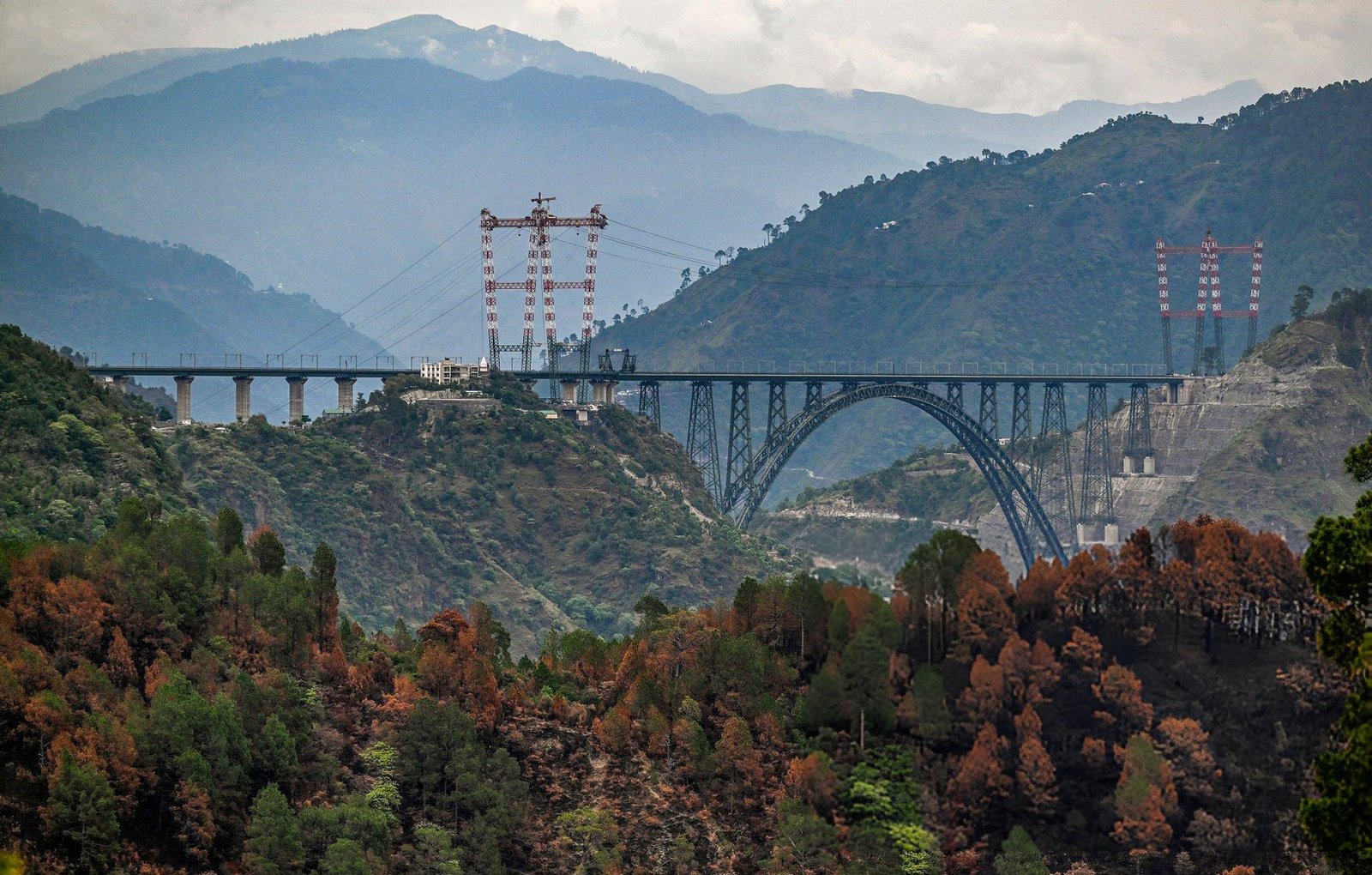
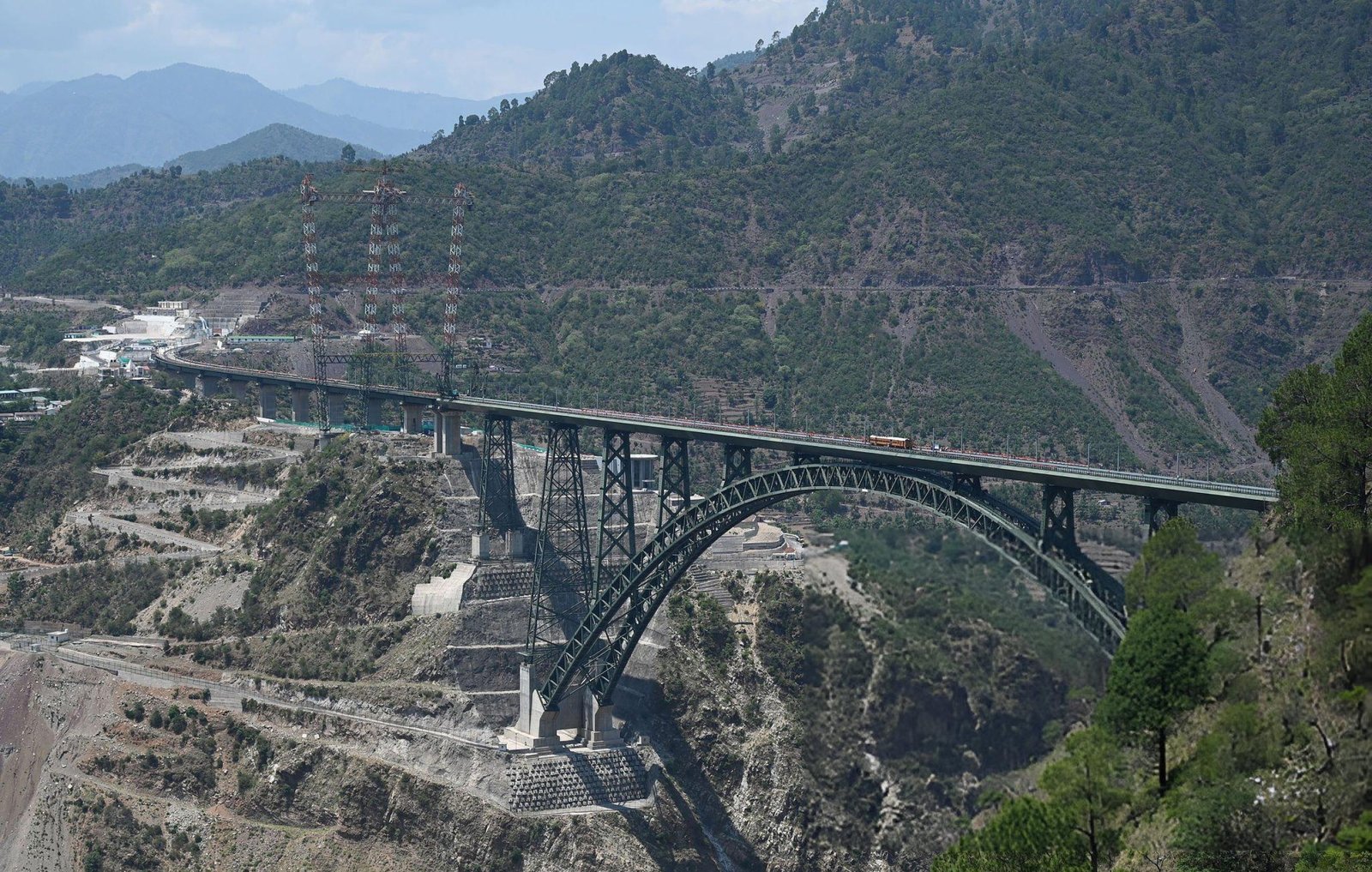
Soaring 359 meters above the Chenab River, the Chenab Rail Bridge is not just an impressive feat of engineering; it’s a crucial piece in India’s plan to boost connectivity, security, and unity in the politically sensitive region of Jammu & Kashmir (J&K). This bridge, a key part of the Udhampur–Srinagar–Baramulla Rail Link (USBRL), showcases India’s bigger plan to weave even distant areas into its national development and defense framework.
This post explores:
- The bridge’s strategic value
- Its technical and security design
- Political symbolism
- Its place in India’s defense and regional posture
- Resulting geopolitical dynamics
- Related concerns and public discourse
1. Strategic Importance in the Himalayan Landscape
1.1 A Key Segment of USBRL
This 272-kilometer USBRL has been stuck in the treacherous Himalayas for decades, incomplete. The key part is the Chenab Bridge—it’s a crucial connection between Jammu and the Kashmir Valley, finally making year-round train travel possible.
1.2 National Integration and Civil Governance
Linking Kashmir with a railway line is about more than just a symbolic gesture of unity; it’s about replacing a fragile 300-kilometer highway that’s frequently blocked by snowfall and landslides. This railway ensures dependable transportation for the public, improves access to healthcare, and boosts educational opportunities.
1.3 Defense and Strategic Mobility
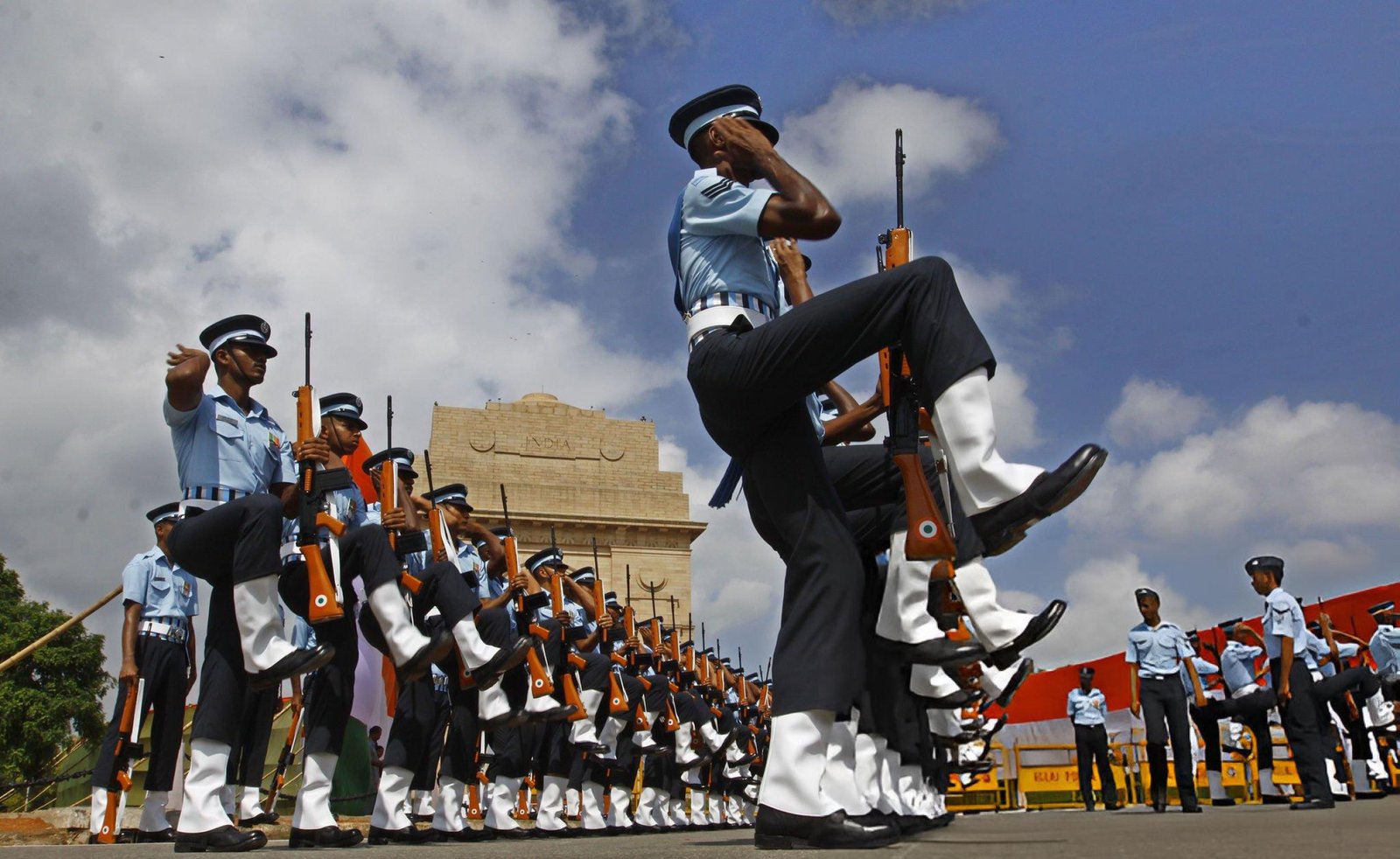
The bridge is cleverly placed close to the Line of Control and up in the mountains, letting the military move equipment and supplies quickly. It makes getting things to areas next to Pakistan and China much faster.
A retired officer pointed out that these supply lines that work in any weather mean we don’t have to rely as much on expensive airplanes or roads that get snowy and blocked in the winter.
2. Engineering for Security and Durability
2.1 Blast Resistance and Seismic Strength
Okay, I understand. Here’s a paraphrased version of the text, keeping the same meaning and using a more human-like tone, all while sticking to the original language:
The bridge is designed to be extra tough against terrorist attacks. It’s built using special blast-resistant techniques approved by DRDO, so even if a supporting pillar gets hit, people can still cross safely.
Plus, the bridge is made to withstand really strong earthquakes, up to a magnitude of 8 (which is Zone V). It’s also equipped with sensors that constantly check its condition to make sure everything is okay.
2.2 Extreme Weather Engineering
The bridge is built to withstand winds as strong as 266 km/h and temperature swings from –10°C to +40°C. It’s made with materials that resist corrosion and has monitoring systems to help it last a long time.
2.3 Construction Despite Constraints
Engineers had to work high above a gorge, 360 meters up, in an area with unpredictable geology. They used cable cranes, custom labs, and temporary housing. More than 1,300 workers and 300 engineers worked through harsh winters and even earthquakes to finish the bridge in 2022.
3. Political Symbolism and Messaging
3.1 Symbol of Unity and Resolve
Prime Minister Modi’s inauguration speech framed the bridge as “a crown jewel of Indian unity” and “national identity realized,” reinforcing its political significance.
3.2 Post-Conflict Infrastructure Diplomacy
Its unveiling followed a terrorist attack in Pahalgam and cross-border tensions. The ceremony doubled as a statement of resilience and confidence in Kashmir’s security.
3.3 Reasserting Central Authority
Post-Article 370 repeal, infrastructure projects like USBRL reinforce federal control and integration—sending a clear signal of governance continuity.
4. Defense, Supply, and Regional Dynamics
4.1 Rapid Troop and Logistics Mobility
The rail link enables high-capacity movement of personnel, equipment, and supplies via the Vande Bharata Express—cutting travel times and improving strategic logistics.
4.2 Deterrence and Military Readiness
Having stable rail access in a militarized zone boosts deterrence posture along borders with Pakistan and China—mitigating isolation during harsh winter months.
4.3 Multi-Domain Infrastructure Integration
Paired with developments like the Anji Khad cable-stayed bridge and Zoji-La tunnel to Ladakh, Chenab Rail Bridge is part of a broader strategic connectivity network along India’s sensitive frontiers.
5. Geopolitical Ramifications
5.1 Regional Domination vs. Regional Cooperation
Alongside projects like the Anji Khad cable-stayed bridge and the Zoji-La tunnel leading to Ladakh, the Chenab Rail Bridge is a piece of a larger plan to improve connections along India’s border areas, which are quite sensitive.
5.2 Global Narrative Reframing
These infrastructure improvements can certainly strengthen a country’s control over its territory, but they might also increase existing tensions. Islamabad has already voiced its disapproval of these developments, and experts are concerned that these actions might make China see India as even more ambitious.
5.3 Implications for China–India and India–Pakistan Relations
India’s move to boost its logistics and military muscle in a disputed region carries a carefully calculated message. Even so, it might provoke reactions like a military arms race or a diplomatic kerfuffle.
6. Domestic Responses and Local Concerns
6.1 Proponents: Connectivity, Security, Prosperity
Supporters highlight:
- Permanent all-weather access
- Boosts in tourism, education, healthcare access
- Defense readiness and national cohesion
Quotes from officials celebrate it as “transforming Kashmir’s connectivity and security”.
6.2 Critics: Environmental and Cultural Concerns
People in Reasi have been complaining about nature taking a hit – drying up water sources and limited access to them. Also, some argue that these development plans might chip away at Kashmir’s unique cultural identity.
[ruby_related heading=”More Read” total=5 layout=1 offset=5]
7. Key Data and Stats
- Bridge height: 359 m—35 m taller than Eiffel Tower.
- Bridge length: 1,315 m with a 467 m arch span.
- Construction materials: ~30,000 t steel (12,000 t from SAIL Bhilai), 66,000 m³ concrete.
- Budget: Approx ₹1,486 crore ($185 million); USBRL total cost ~ ₹35,000–44,000 crore ($4–5 billion).
- Built to withstand zone V seismic activity, 266 km/h winds, and 40 t blast impact.
- Trial runs: June 2024; Operational launch: June 6, 2025 .
- USBRL includes 36 tunnels & 943 bridges.
- Job creation: 14,000 contractors with 65% local, 5 million man-days, 1833 ha land ownership benefit.
8. Frequently Asked Questions (FAQs)
Q1: Why is the Chenab Bridge strategically important?
It enables all-weather rail connectivity, enhances military logistics in a sensitive region, and strengthens national unity.
Q2: Does it have security features?
Yes—earthquake-resistant, wind-resistant, blast-proof, and equipped with real-time monitoring and sensors.
Q3: Has it been built only for political messaging?
While symbolic, the project also delivers practical benefits: strategic mobility, civilian access, and regional development.
Q4: What are the international implications?
It signals India’s intent to integrate frontier regions, potentially raising concerns in Pakistan and China, while boosting India’s global infrastructure profile.
Q5: Were there environmental or community issues?
Some locals cite drying wells and restricted movement. Authorities must balance development with ecological and cultural sensitivity.
It enables all-weather rail connectivity, enhances military logistics in a sensitive region, and strengthens national unity.
Yes—earthquake-resistant, wind-resistant, blast-proof, and equipped with real-time monitoring and sensors.
While symbolic, the project also delivers practical benefits: strategic mobility, civilian access, and regional development.
It signals India’s intent to integrate frontier regions, potentially raising concerns in Pakistan and China, while boosting India’s global infrastructure profile.
Some locals cite drying wells and restricted movement. Authorities must balance development with ecological and cultural sensitivity.