





Minimum Support Price Policy: Economic Logic and Political Reality
The Minimum Support Price Policy remains one of the most debated agricultural interventions in India’s economic policy framework. For aspirants preparing for competitive exams such as those conducted by the Union Public Service Commission or the Staff Selection Commission, understanding the economic logic behind this policy and the political reality shaping it is essential.
The Minimum Support Price Policy is not just a topic in agricultural economics; it is frequently asked in essay papers, General Studies, and interview discussions because it sits at the intersection of economic policy, farmer welfare, fiscal sustainability, and political decision-making.
The MSP debate India often surfaces in discussions on agricultural reforms, farmer protests, food security, and market reforms. Aspirants who approach the topic superficially often struggle to present a balanced and structured answer. This article provides a strategic framework to help candidates write analytically sound answers that can score higher in examinations.
Problem Statement
A common mistake among aspirants is treating the Minimum Support Price Policy as a purely theoretical agricultural concept. Students often memorize definitions such as “MSP is the minimum price at which the government purchases crops from farmers,” but fail to connect the policy to economic reasoning, fiscal implications, and political considerations.
Typical problems include:
- Writing descriptive answers without analytical depth
- Ignoring the economic rationale behind MSP
- Failing to address the MSP debate India with multiple perspectives
- Missing the political economy dimension
For example, many answers simply state that MSP helps farmers and ensures food security. While this is correct, such responses lack the layered analysis required in competitive exams. Examiners expect candidates to explain why MSP exists, how it functions economically, and why it remains politically sensitive.
Without this analytical framework, answers remain generic and fail to secure high marks.
Concept Clarity
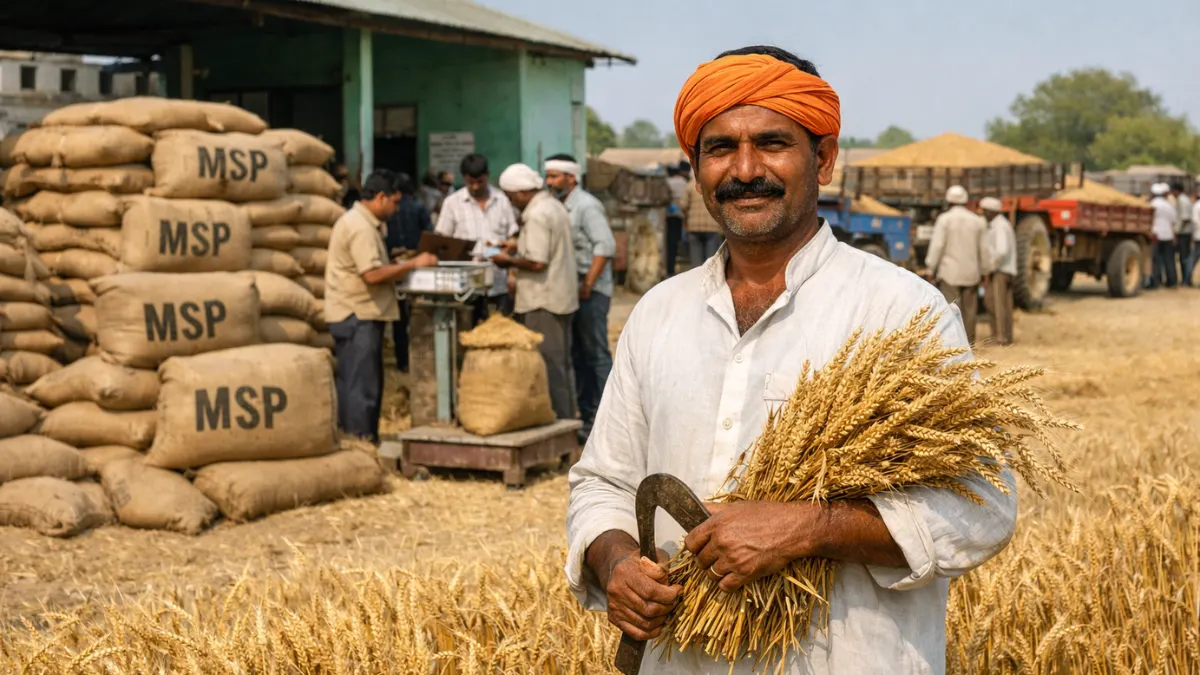
The Minimum Support Price Policy is a government intervention designed to protect farmers from sharp price fluctuations. Under this system, the government announces minimum prices for certain crops before the sowing season.
These prices are recommended by the Commission for Agricultural Costs and Prices and approved by the Government of India.
Economic Logic Behind MSP
The policy addresses three major economic problems:
Price Volatility in Agriculture
Agricultural markets often experience large fluctuations due to weather conditions, supply shocks, and demand variations. MSP acts as a price floor that stabilizes farmer income.
Production Incentives
MSP encourages farmers to grow essential crops such as wheat and rice, ensuring food security.
Market Failure
Agriculture often suffers from imperfect markets where farmers have limited bargaining power. MSP ensures a guaranteed price regardless of market fluctuations.
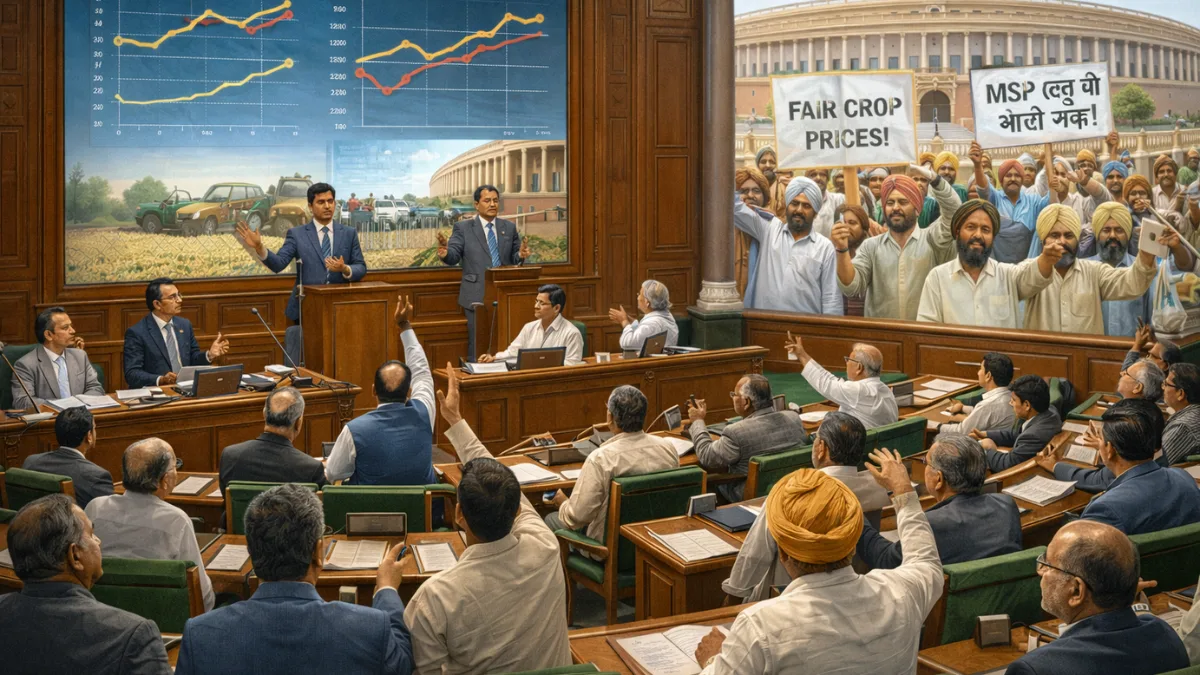
Political Reality
While the economic rationale supports MSP, its implementation has strong political implications.
Key political factors include:
- Farmer voting blocs
- Regional agricultural dependence
- Food security programs
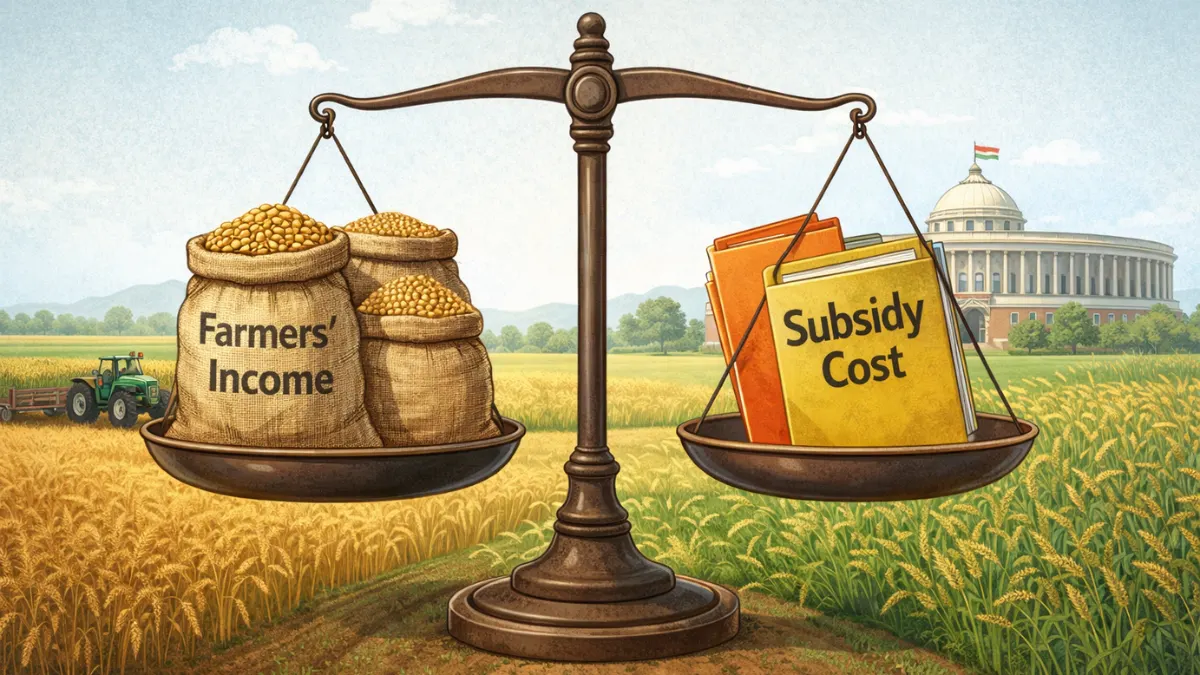
- Budgetary constraints
The MSP debate India intensifies during discussions on agricultural reforms because MSP procurement is concentrated mainly in states like Punjab and Haryana.
Thus, understanding MSP requires analyzing both economic logic and political realities.
Practical Framework
Aspirants should use a structured framework when writing answers about the Minimum Support Price Policy.
Step-by-Step Answer Approach
Step 1: Start with Definition
Provide a concise definition explaining MSP.
Step 2: Explain Economic Logic
Discuss why the policy exists in terms of market stability and farmer income.
Step 3: Highlight Benefits
Explain how MSP contributes to food security and farmer protection.
Step 4: Discuss Limitations
Mention fiscal burden, regional disparities, and market distortions.
Step 5: Address Political Economy
Explain why reforms are politically sensitive.
Step 6: Provide Balanced Conclusion
Suggest reforms such as diversification and improved procurement mechanisms.
Example Answer Structure
Introduction
Define MSP and mention its policy objective.
Body
- Economic rationale
- Role in food security
- Limitations and distortions
- Political considerations
Conclusion
Suggest reform-oriented solutions.
Model Answer Snippet (Short Format)
Question: Explain the significance and challenges of the Minimum Support Price system in India.
Answer:
The Minimum Support Price Policy is a government mechanism that guarantees a minimum price to farmers for specific crops to protect them from market volatility. Recommended by the Commission for Agricultural Costs and Prices, MSP aims to ensure income stability and incentivize agricultural production.
Economically, MSP addresses market failures and promotes food security by encouraging cultivation of staple crops. However, the system faces several challenges including fiscal pressure on the government, regional concentration of procurement, and distortions in cropping patterns.
The ongoing MSP debate India highlights the need to balance farmer welfare with market efficiency through reforms such as improved procurement infrastructure and crop diversification.
Mistake vs Correct Approach
| Mistake | Correct Approach |
| Defining MSP only | Explain economic rationale |
| Ignoring political context | Discuss political economy |
| Listing advantages only | Present balanced analysis |
| No policy reform suggestions | Include practical solutions |
Common Errors
Several recurring mistakes appear in answers about the Minimum Support Price Policy.
Treating MSP as a Welfare Scheme
MSP is not simply a subsidy program. It is a price stabilization mechanism designed to influence agricultural production and market outcomes.
Ignoring Procurement Reality
Students often assume that MSP benefits all farmers. In reality, procurement is concentrated in a few crops and regions.
Lack of Data or Institutional References
Answers that fail to mention institutions like the Commission for Agricultural Costs and Prices appear incomplete.
One-Sided Arguments
Some answers either completely support MSP or completely criticize it. Balanced analysis is essential for high scores.
No Link to Agricultural Reforms
Examiners expect candidates to connect MSP with broader agricultural reforms and policy debates.
Tactical Application
Understanding the Minimum Support Price Policy strategically can significantly improve answer quality.
Where MSP Appears in Exams
The topic frequently appears in:
- Indian Economy papers
- Essay papers
- Agricultural policy discussions
- Interview questions
The MSP debate India often appears in questions related to:
- Farmer protests
- Agricultural market reforms
- Food security programs
Scoring Strategy
High-scoring answers usually include:
- Institutional references
- Balanced arguments
- Economic logic explanation
- Political economy perspective
A well-structured answer demonstrates conceptual clarity and policy awareness, which examiners reward with higher marks.
Improvement Plan
To master topics like the Minimum Support Price Policy, aspirants should follow a systematic preparation method.
Weekly Strategy
Day 1 — Concept Study
Understand the core policy framework and institutions involved.
Day 2 — Issue Analysis
Study debates and criticisms surrounding MSP.
Day 3 — Answer Writing
Write short analytical answers on the MSP debate India.
Day 4 — Peer Review
Compare answers with topper copies.
Day 5 — Data Integration
Add statistics and committee recommendations.
Day 6 — Mock Test Practice
Attempt timed questions.
Day 7 — Revision
Summarize key points into quick revision notes.
- [Agricultural Reforms in India Explained]
- [Food Security Policies in India]
- [How to Write High-Scoring Economy Answers]
These internal links strengthen topical authority for the Government Exams section.
[ruby_related heading=”More Read” total=5 layout=1 offset=5]
Conclusion
The Minimum Support Price Policy remains a central feature of India’s agricultural policy landscape. While its economic logic lies in stabilizing farmer income and ensuring food security, the political realities surrounding its implementation make reform complex.
For competitive exam aspirants, mastering the Minimum Support Price Policy requires more than memorizing definitions. A strong answer must integrate economic reasoning, institutional understanding, and the ongoing MSP debate India.
Candidates who structure their answers with balanced analysis, policy awareness, and practical insights are far more likely to secure higher marks in government examinations.
FAQs: Minimum Support Price Policy
- What is the Minimum Support Price Policy in India?
The Minimum Support Price Policy is a government mechanism that guarantees farmers a minimum price for certain crops, protecting them from sharp market price declines. - Who decides MSP in India?
MSP is recommended by the Commission for Agricultural Costs and Prices and approved by the Government of India before the sowing season. - Why is MSP important for farmers?
MSP ensures income stability for farmers by guaranteeing a minimum price for their crops even if market prices fall below that level. - What is the MSP debate in India?
The MSP debate India revolves around issues such as limited crop coverage, regional concentration of procurement, fiscal burden on the government, and demands for legal guarantees of MSP. - What are the major criticisms of the MSP system?
Critics argue that MSP distorts market signals, encourages overproduction of certain crops like wheat and rice, and benefits farmers mainly in a few states rather than across the country.