





Why Greenland Suddenly Matters to the World
For decades, Greenland rarely featured in daily global news cycles. Known more for its ice sheets than its influence, the world’s largest island often appeared distant, geographically and politically. That perception has changed sharply.
Today, Greenland is no longer a quiet Arctic territory on the margins of world affairs. It sits at the intersection of climate change, great-power competition, resource security, and indigenous self-determination. From renewed US interest to military strategy debates and environmental emergencies, questions around what is happening in Greenland are no longer academic, they are strategic.
This article examines the forces pulling Greenland into the global spotlight, from geopolitical competition and security concerns to environmental change and local political realities. Rather than amplifying speculation, it focuses on verified developments and the broader context shaping Greenland’s growing relevance.
Understanding Greenland: Geography, Governance, and Global Position
To understand current developments, it is essential to first understand what Greenland is, and what it is not.
Greenland is an autonomous territory within the Kingdom of Denmark. It has its own elected government, controls most domestic affairs, and retains strong cultural identity rooted in Inuit heritage. Denmark, however, continues to manage foreign policy, defense, and monetary affairs.
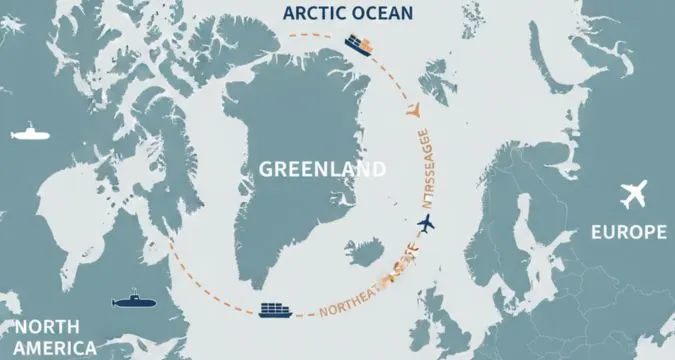
Geographically, Greenland occupies a unique position:
- It lies between North America and Europe
- It sits at the gateway to the Arctic Ocean
- It is rich in untapped natural resources
- Over 80% of its landmass is covered by ice
This combination of autonomy, strategic location, and environmental sensitivity makes Greenland unusually important in today’s geopolitical climate.
What Is Going On in Greenland Right Now?
At present, Greenland is navigating multiple overlapping pressures rather than a single defining crisis.
Political Developments
Domestically, Greenland continues to debate the pace and feasibility of greater independence from Denmark. While full independence remains a long-term aspiration for many, economic dependence and security realities complicate the timeline.
Elections in recent years have reflected:
- Growing concern over foreign mining projects
- Environmental protection versus economic development
- The role of external powers in local decision-making
These debates are central to understanding current Greenland news beyond surface-level headlines.
Strategic and Security Shifts
Greenland has become strategically significant as Arctic sea routes become more accessible due to melting ice. This has brought increased attention from NATO, the United States, and other global powers concerned about security in the High North.
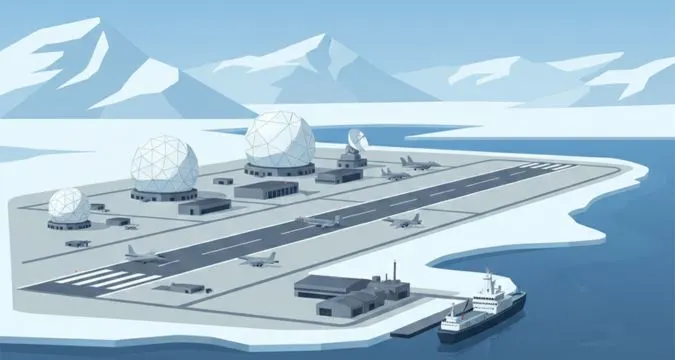
Military infrastructure already exists on the island, most notably the US-operated Thule Air Base (now Pituffik Space Base), which plays a role in missile warning and space surveillance.
Economic and Social Realities
Greenland faces persistent challenges:
- High cost of living
- Limited infrastructure
- Youth migration
- Dependence on fishing and Danish subsidies
Balancing economic growth with environmental and cultural preservation remains a core tension.
Why the US Is Interested in Greenland
The question “Why is the US trying to buy Greenland?” resurfaced globally in 2019, but the underlying interest predates that moment by over a century.
Historical Context of US Interest
The United States has considered acquiring Greenland multiple times:
- After World War II, the US formally proposed purchasing the island
- During the Cold War, Greenland’s strategic value increased significantly
- The US established a permanent military presence during this period
These moves were driven by defense, not territory expansion for its own sake.
Strategic Reasons Behind US Interest
The renewed US interest in Greenland is rooted in three core factors:
1. Arctic Security
As Arctic ice melts, new shipping lanes and military corridors are opening. Control and monitoring of these routes are increasingly important for missile defense and early-warning systems.
Greenland’s location allows:
- Monitoring of transpolar missile trajectories
- Strategic positioning between Russia, Europe, and North America
2. Rare Earth and Critical Minerals
Greenland is believed to hold significant reserves of rare earth elements, essential for:
- Renewable energy technologies
- Defense systems
- Electronics and semiconductors
Reducing reliance on limited global suppliers has become a strategic priority for major economies.
3. Influence in the Arctic Order
The Arctic is no longer a frozen buffer zone. It is emerging as a contested space. Maintaining influence in Greenland helps the US shape Arctic governance norms and security arrangements.
Importantly, interest does not equal control. Greenlandic and Danish authorities have repeatedly stated that the island is not for sale.
The Disaster in Greenland: What Actually Happened?
When headlines refer to a “disaster in Greenland,” they often point to environmental and climate-related events rather than a single catastrophic incident.
Climate-Driven Disasters
Greenland has experienced:
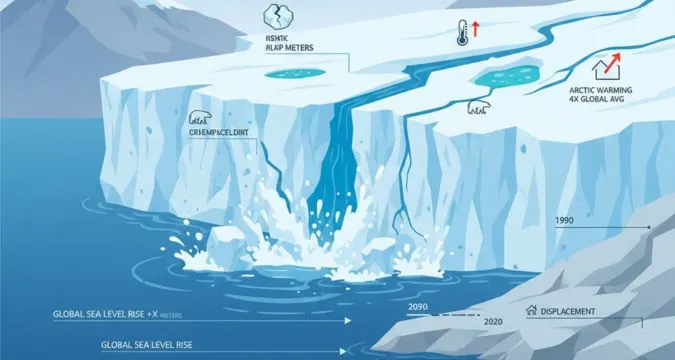
- Accelerated ice sheet melting
- Record-breaking temperature spikes
- Glacier collapses causing localized flooding and tsunamis
One notable event involved a massive landslide triggered by thawing permafrost, which generated a tsunami affecting coastal settlements. While casualties were limited, the event highlighted new risks emerging from climate instability.
Why These Events Matter Globally
Greenland’s ice sheet plays a critical role in regulating global sea levels. Accelerated melting contributes directly to:
- Rising sea levels worldwide
- Coastal flooding in distant countries
- Disruption of ocean circulation patterns
In this sense, disasters in Greenland are not isolated, they are globally consequential.
Broader Global Context: Climate Change and Great Power Competition
Greenland’s re-emergence in global affairs cannot be separated from two defining forces of the 21st century.
Climate Change as a Strategic Driver
Climate change is transforming geography into geopolitics.
- Ice melt is creating access where none existed
- Natural resources are becoming extractable
- New environmental risks are emerging
Greenland sits at the center of this transformation.
Renewed Great Power Competition
The Arctic is increasingly viewed through a strategic lens. Russia, the US, and China have all articulated Arctic interests, even if their approaches differ.
Greenland’s future is shaped by how it navigates this attention without losing agency.
Implications: Who This Affects and Why It Matters
For Greenlandic Society
- Greater global attention brings opportunity and risk
- Economic development may accelerate
- Cultural and environmental concerns remain paramount
Local voices are increasingly asserting that decisions about Greenland must prioritize Greenlanders.
For Global Security
- Arctic stability is becoming part of global security planning
- Miscalculation or militarization could raise tensions
- Cooperative frameworks remain essential
For the Rest of the World
Changes in Greenland affect:
- Climate outcomes
- Global shipping routes
- Resource markets
- International diplomacy
Ignoring Greenland today means misunderstanding tomorrow’s global landscape.
Common Misconceptions About Greenland
Misconception 1: Greenland Is a Country for Sale
Greenland is not a commodity. It is a self-governing territory with its own political processes and cultural identity.
Misconception 2: US Interest Is Only About Land
The interest is strategic, not territorial in a colonial sense. Security, climate monitoring, and resources drive policy attention.
Misconception 3: Greenland’s Issues Are Local Only
What happens in Greenland affects global climate systems and international security calculations.
What to Watch Next: Signals That Matter
Several developments will shape Greenland’s future relevance:
- Pace of Arctic ice melt
- Shifts in US–NATO Arctic policy
- Greenland’s internal political debates on independence
- Environmental regulations around mining and infrastructure
Readers following global affairs would benefit from tracking how Arctic issues increasingly intersect with mainstream geopolitics, a theme often explored in broader geopolitical analysis on The Vue Times.
Key Takeaways
- Greenland has moved from the periphery to the center of global attention
- Climate change and security dynamics drive renewed interest
- US involvement reflects strategic concerns, not acquisition feasibility
- Environmental disasters in Greenland have global implications
- Greenland’s future depends on balancing autonomy, development, and global pressures
Understanding Greenland today means understanding how geography, climate, and power are reshaping world politics.
| Feature | Status |
| U.S. Goal | Full control or sovereign military/mining enclaves. |
| Danish/Greenlandic Stance | Sovereignty is non-negotiable; open to defense cooperation only. |
| Economic Value | Rare earth minerals, oil, gas, and new polar trade routes. |
| Recent Disaster | Megatsunami caused by climate-linked mountain collapse. |
[ruby_related heading=”More Read” total=5 layout=1 offset=5]
Frequently Asked Questions
Why is Greenland appearing so often in global news now?
Greenland’s growing visibility is driven by climate change, Arctic security concerns, and competition among major powers. Melting ice is opening new routes and revealing resources, while its strategic location has renewed military and diplomatic attention. These overlapping trends have pushed Greenland into mainstream geopolitical discussions.
Is the United States still trying to buy Greenland?
There is no active purchase effort. The idea resurfaced publicly in recent years, but Greenland and Denmark have clearly rejected it. Current US engagement focuses on security cooperation, investment, and diplomatic presence rather than ownership.
What kind of disasters has Greenland experienced recently?
Most recent disasters relate to climate change, including glacier instability, landslides, and flooding triggered by permafrost thaw. These events highlight new environmental risks emerging as Arctic temperatures rise faster than the global average.
How does Greenland’s political status affect global decisions?
Greenland’s autonomy allows it to control domestic matters, but foreign policy and defense remain linked to Denmark. This shared governance structure shapes how international partnerships, military presence, and economic projects are negotiated.
What does Greenland’s future mean for the rest of the world?
Greenland’s future affects sea-level rise, climate systems, Arctic security, and access to critical resources. Decisions made there will have consequences far beyond the island, influencing global environmental and geopolitical stability in the decades ahead.